The book · approx. 59,500 words
What many organizations call “succession planning” is really crisis replacement.
True succession planning is the long-term cultivation of a person over years — not a name pulled off the bench the week the seat empties. Done intentionally, it makes bench strength deep.
“Passing the Mantle: Biblical Succession Planning Through Intentional Leadership Development” builds that discipline from Scripture, from the field, and from more than thirty years of leadership practice.
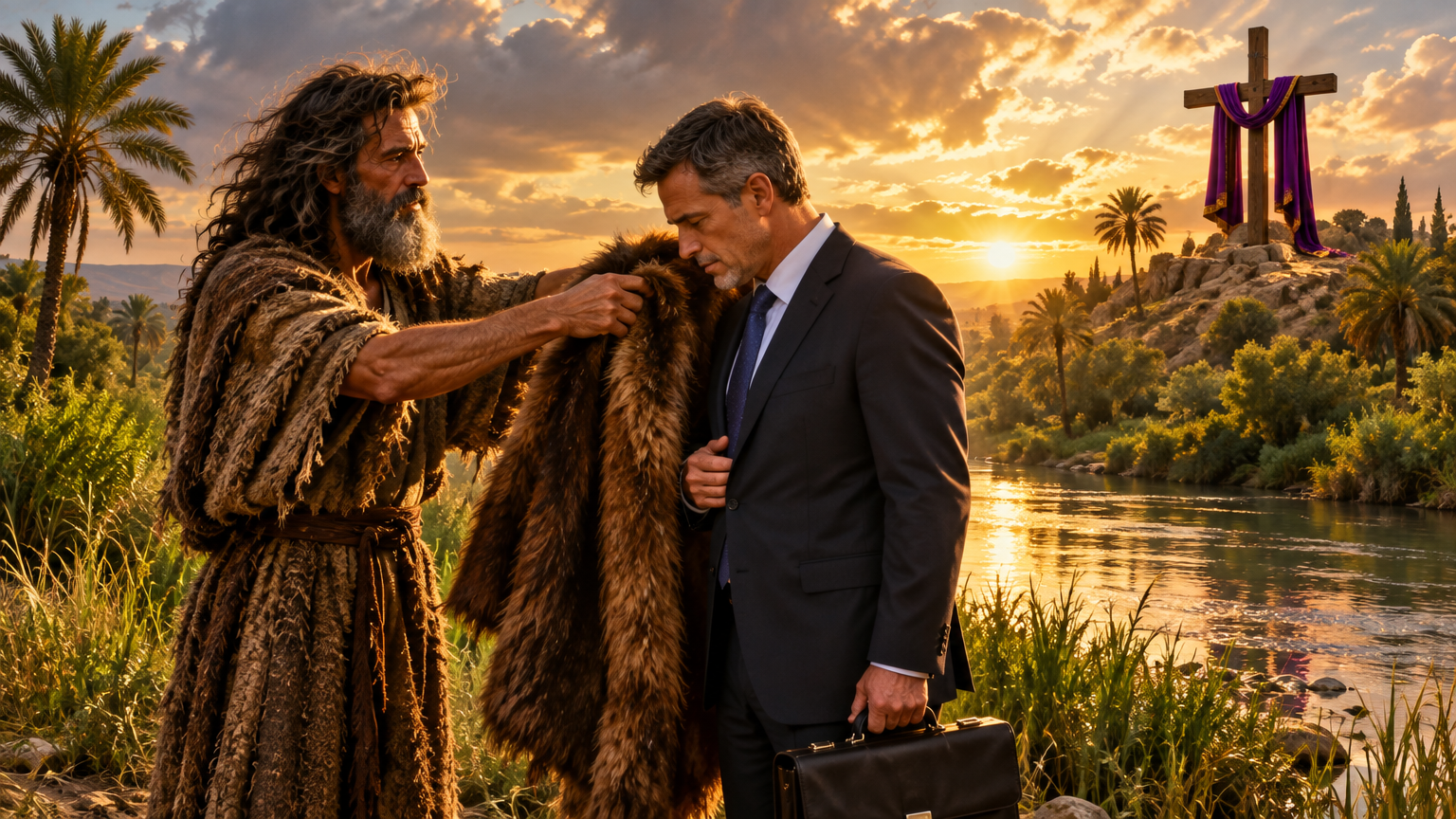
“Next man up” is a contingency. Passing the mantle is a discipline.
The core argument
Three obligations this work rests on
-
I
The Duty
Succession is a moral obligation owed to the institution and to the family it serves. To leave the work unprepared is to put in jeopardy what was entrusted to your care.
-
II
The Intentionality
Great legacies do not happen by accident; they are engineered — by design, over years, through the deliberate development of named successors.
-
III
The Continuity
The mission is larger than the individual currently holding the position. The leader’s task is to hand on a work that outlives the leader.
Three themes that run through the whole book
-
01
Godly Character
Who a successor is matters before what a successor can do. Character is the ground on which every later competency either holds or collapses.
-
02
Intentional Relationship
Succession happens person to person, over time — in mentoring, coaching, and the ordinary shared work of ministry.
-
03
Intentional Stewardship
The leader stewards the mission beyond their own tenure. Clear Plans, Clear Pathways, and Clear Pools turn that stewardship into a working system.
The shape of the book
-
Part I — Biblical Foundations
Four models: Moses and Joshua (preparation and transition), Elijah and Elisha (power and persistence), Jesus and the Disciples (a model for multiplication), and Paul and his team (succession in the early church).
-
Part II — Theoretical and Practical Framework
A biblical-theological framework, lessons from the field, barriers to succession, and Clear Plans / Clear Pathways / Clear Pools.
-
Part III — Application and Reflection
Building your succession plan, character, competencies, and sustaining the legacy.
Pattern and method
In the Old Testament, God directed the successor. In the New Testament, the leader selected and developed a group of potential successors. Only Paul had formal education — the others learned on the job. The primary method throughout was apprenticeship: discipleship lived out in the ordinary work of the mission.
Four intelligences
- Convictionalthe core
- Ethical
- Emotional
- Cultural
About Me
Thirty years of leading, and of learning to hand it on.
Peter Frost, PhD, is a leadership-development expert and author specializing in biblical succession planning. More than thirty years of experience across the U.S. Navy, local church ministry, the mission field, and business.
He served twenty years in the U.S. Navy — from a young Sailor aboard the USS NASHVILLE (LPD-13) in Norfolk, VA to retirement — and credits the Navy with pushing him to lead and develop others.
Seminary taught him to interpret Scripture; Papua New Guinea, where he and his wife served as missionaries, combined those backgrounds.
Where the experience comes from
- 20 years U.S. NavyFrom a young Sailor aboard the USS NASHVILLE (LPD-13) in Norfolk, VA to retirement.
- Ministry Local church ministry
- Mission field Papua New GuineaServed as missionaries — he and his wife.
- Business Leadership in the marketplace
- PhD Practical TheologyThis book reshaped his doctoral dissertation into a practical guide.
From dissertation to field guide
His PhD is in Practical Theology; this book reshaped his doctoral dissertation into a practical guide. He read widely from authors and researchers around the globe to build the strategies, character list, and competency list.
Who this is for
His heart is Christian leaders and the organizations that develop them — churches, nonprofits, parachurch ministries, regardless of denominational affiliation.
Resources
The resource hub: assess, plan, and hand on the work.
The book
Passing the Mantle
Biblical Succession Planning Through Intentional Leadership Development
Appendix 1
Christian Leadership Character Self-Assessment Checklist
Sixteen traits, grouped in three categories.
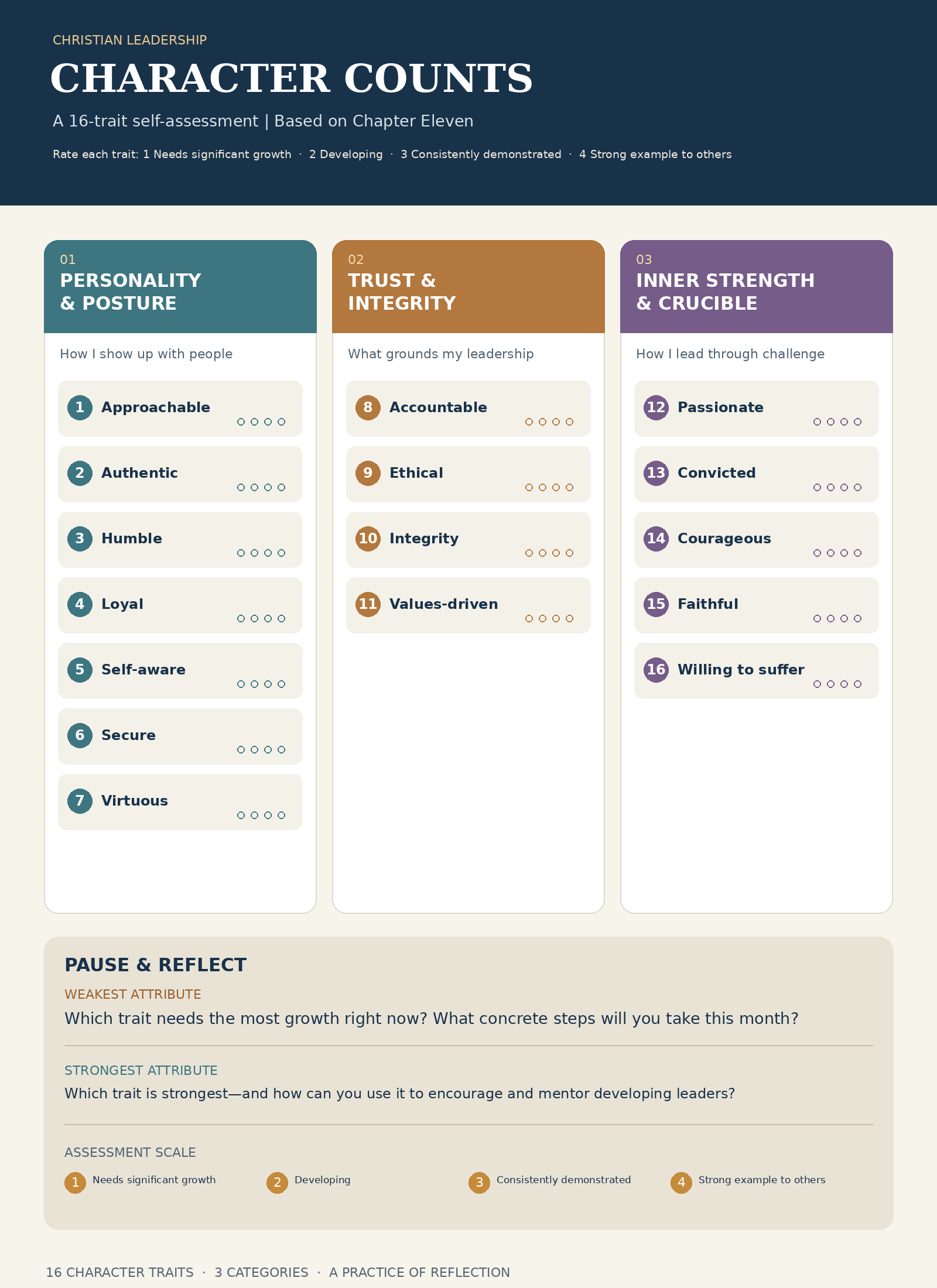
01 · Personality Traits & Posture
- Approachable
- Authentic
- Humble
- Loyal
- Self-Aware
- Secure
- Virtuous
02 · Trust & Integrity
- Accountable
- Ethical
- Integrity
- Values-Driven
03 · Inner Strength & Crucible
- Passionate
- Convicted
- Courageous
- Faithful
- Willing to Suffer
Appendix 2
Biblical Leadership Competency Assessment
Seven stages of development, worked through in order.
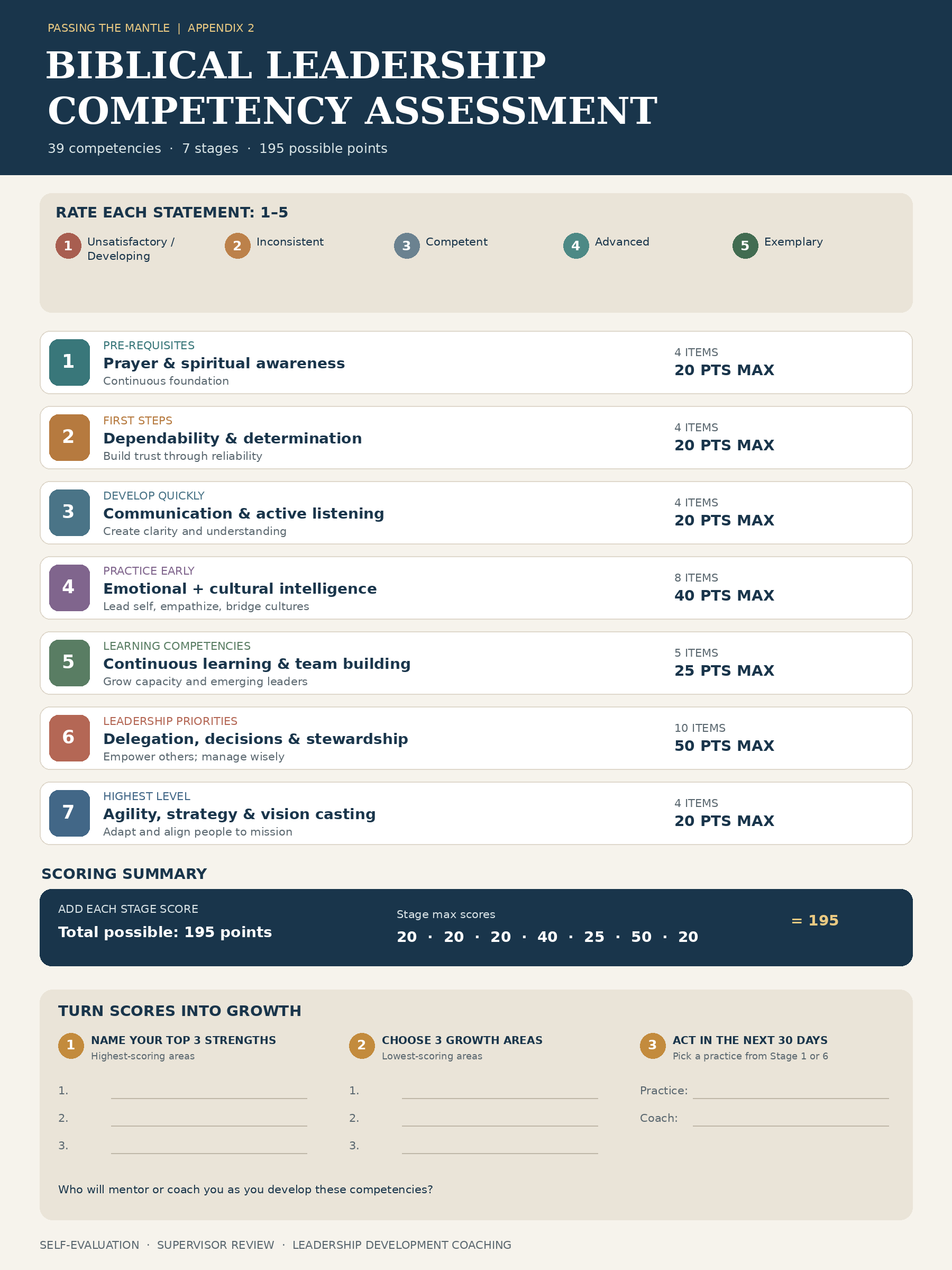
- 01Prayer & Spiritual Awareness
- 02Dependability & Determination
- 03Communication & Active Listening
- 04Emotional Intelligence (EQ) and Cultural Intelligence (CQ) & Global Mindset
- 05Continuous Learning & Team Building
- 06Delegation & Follow-Up, and Decision-Making, Task Management & Stewardship
- 07Agility, Strategy & Vision Casting
Maps
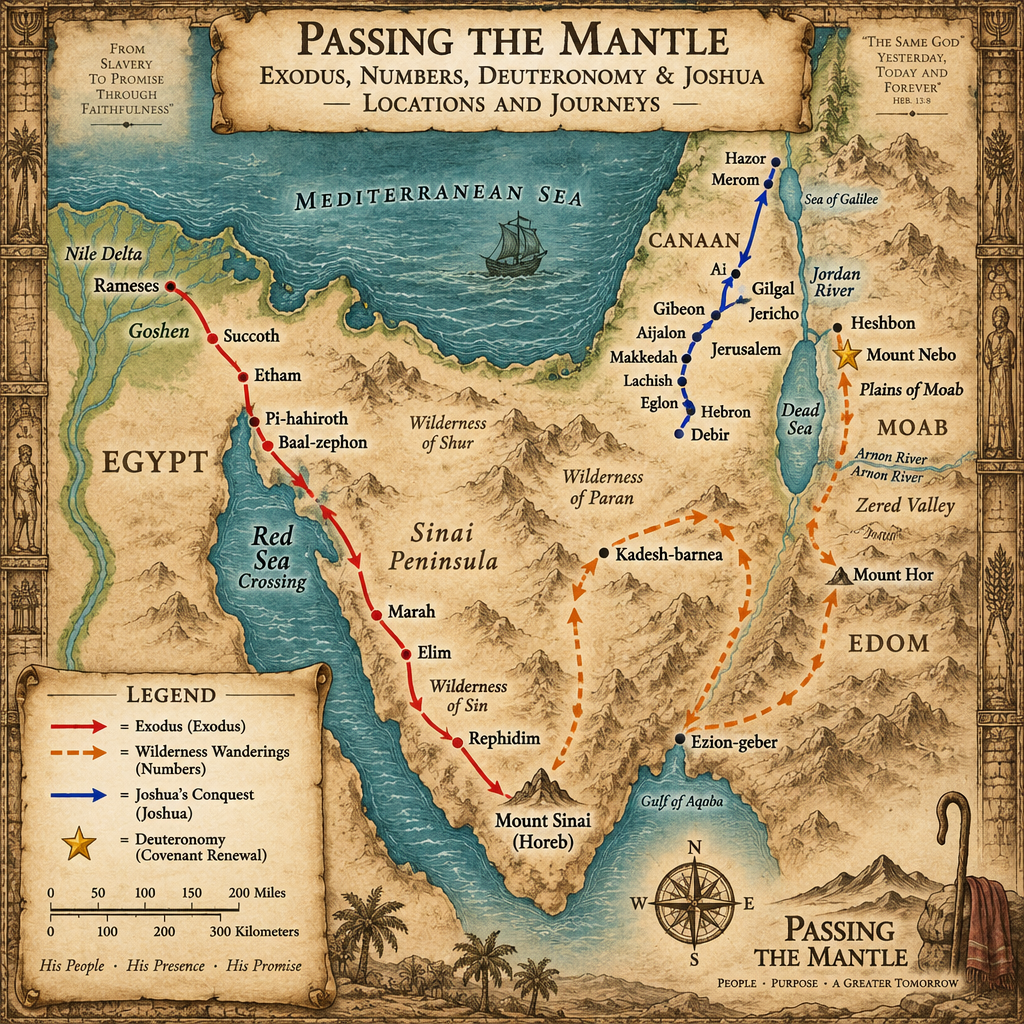
The journeys behind the succession accounts
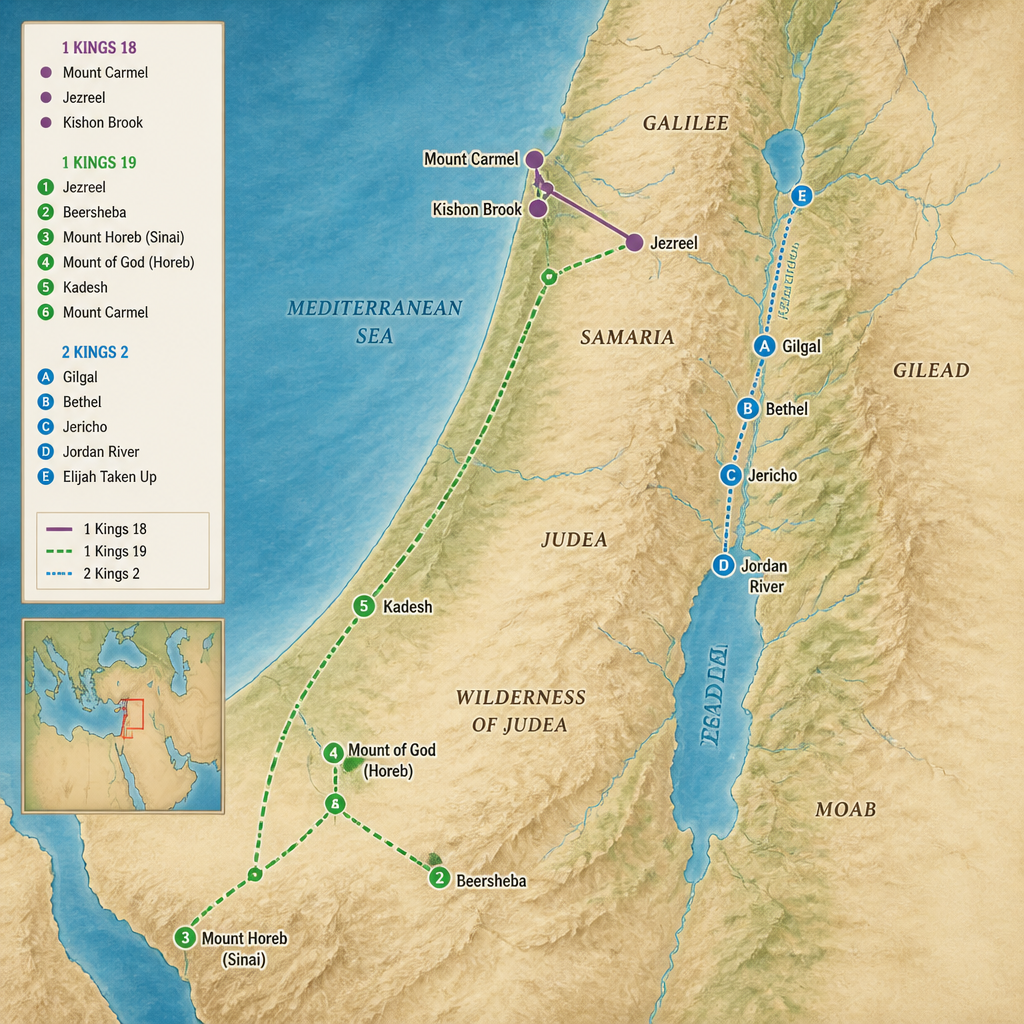
Two maps that trace the biblical journeys behind the book’s accounts: from Egypt to the Promised Land under Moses and Joshua, and the journeys of Elijah and Elisha.
Self-assessment
Succession Readiness Self-Assessment
Mark the character traits you can honestly affirm in your own life today. The count is not a verdict; it is a starting line for the work of preparation.
Members only. Log in or create a free account to open the Succession Readiness Self-Assessment.
Your answers are scored in your browser only — nothing is uploaded or stored on the server.
A fuller interactive planning toolset and a leaders’ forum are planned. Planned · coming soon
Tools for the work
- Clear Plans
- Clear Pathways
- Clear Pools
- Leadership Pipeline
- Individual Development Plans
- Mentoring
- Coaching
- Stretch Assignments
- Potential-Performance Matrix
- Leadership Academy
Works that shaped this book
- Designed to Lead
- The Multiplication Effect
- Stephen R. Covey
- R. Albert Mohler — on convictional intelligence
- M. David Sills — on mentoring and multiplication
- Geiger & Peck
Podcasts
The “Passing the Mantle” podcast
The podcast goes beyond the book and allows leaders to reflect the challenges of developing others—or being developed for leadership. Each episode stands on its own. I hope to have as big of an impact as Brick Heck (watch the video for context).
Coming soon
Episodes from the feed
This list is read live from the podcast RSS feed, so each episode appears here as it is published.
Loading episodes…
Listen where you already listen
- Apple Podcastslinks coming soon
- Spotifylinks coming soon
- RSSsubscribe in any app
Start your succession plan
Begin at the website: work through the Succession Readiness Self-Assessment in the Resources tab, then build the plan from the book’s appendices.
Subscribe for updates
Tools
Succession planning workbench
The appendices to Passing the Mantle turned into a playable formation story. Work through the succession scenarios, watch each member’s competencies and character grow against the seven stages, and keep an eye on the organization’s indicators. Your progress is saved only in this browser.
The Long Work
Interactive tool
Pipeline Progress Tracker
Follow one mentor cohort through the seven stages of the pipeline. Choose a person, score the competencies and character traits on the 1–5 scale, tick off milestones, and export a CSV or a printable progress report.
Demo data. The people and scores in this tracker are illustrative examples that ship with the tool — they are not real staff records. Everything is editable, and your changes are saved only in this browser.
Contact
Questions are welcome — especially from the leaders this is written for.
Whether you lead a church, a nonprofit, or a parachurch ministry, you are invited to write with your questions about succession planning and leadership development.